Return HOME
A Gentle 12-Month Emergency Preparedness Plan for Families with Young Children
Little Learners, Big Preparedness Series
Approx. 20-minute read • Month-by-month with activities, supplies, milestones, and reflection prompts
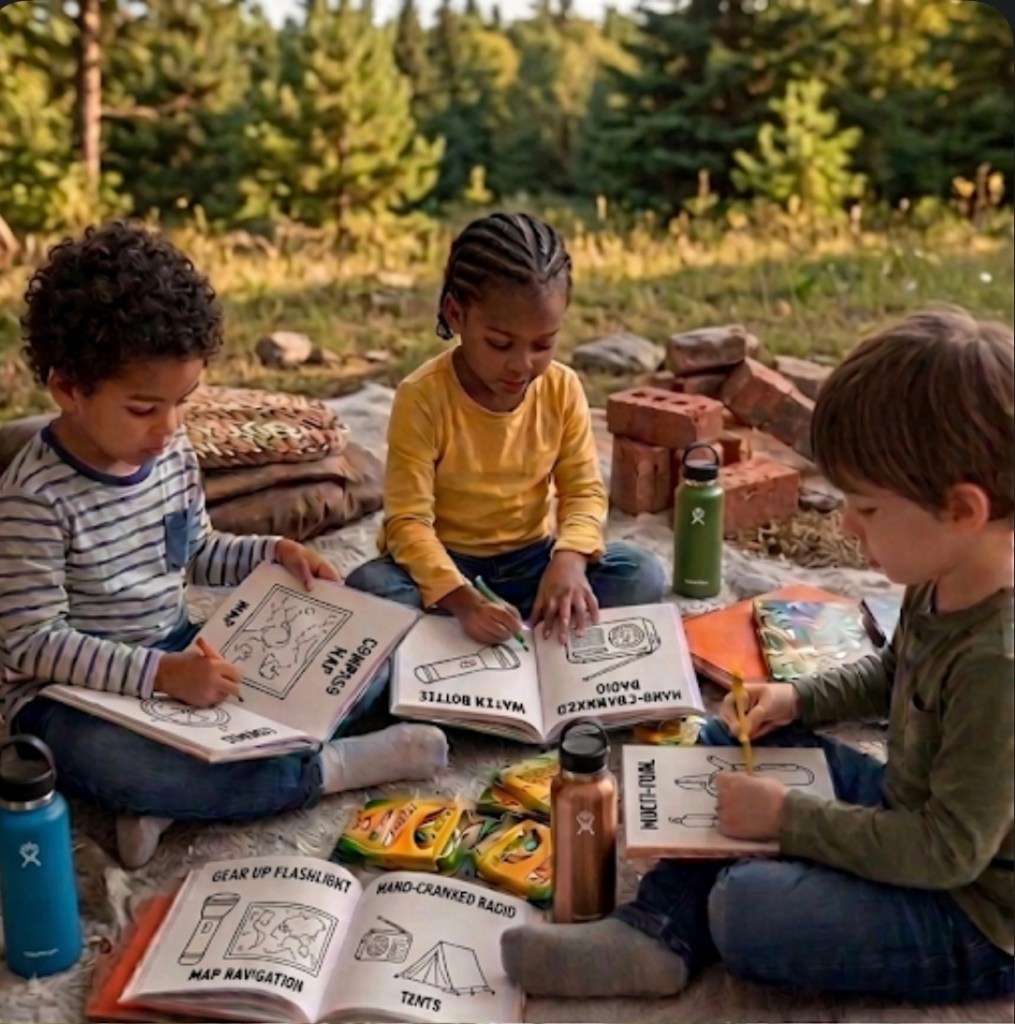
This is the plan that holds everything else together. Every activity, every letter, every conversation in this series has a place in the calendar that follows. Work through it at your family’s pace. Come back to it when life gets in the way. Restart from wherever you stopped — there is no penalty for pausing, only benefit in continuing.
Each month is organized around a focus, a set of activities, supplies to gather, a milestone to celebrate, and a parent reflection prompt. The reflection prompts are not optional extras — they are the part of the plan designed to help you notice what is working, what your child responds to, and how your family’s preparedness culture is developing. Take five minutes with them at the end of each month.
A fully prepared family — in the sense of a family that has worked through this complete 12-month plan — is a genuinely rare thing. By the end of this year, your child will know things that most adults do not. Your family will have equipment, plans, and practiced skills that most households lack. And your preschooler will carry a settled confidence about their family’s readiness that will serve them well into adulthood.
That is worth twelve months of ten-minute investments.
Preparedness is not a project you complete in a weekend. It is a culture you build over time — one small, repeated, caring act at a time.
The 12-Month Plan — Month by Month
Month 1 — Introduction and Assessment
This Month’s Activities
• Work through the series introduction and Post 1 together as a household
• Assess your child against the 13 outcomes in Post 3 — note where they currently are
• Introduce the Flashlight Find game and play it three times this month
• Have one preparedness conversation at dinner — keep it casual and light
Supplies to Gather
• One flashlight per family member — check batteries and confirm working
• A designated, consistent storage spot for the family emergency flashlight
Milestone to Celebrate
• Your child can reliably find the flashlight when asked — with prompting.
Parent Reflection Prompt
• What does our family already know? What do we need to build? What am I most hopeful about as we start this process?
Month 2 — Familiarity and Play
This Month’s Activities
• Read Post 2 — understand how your child learns before you teach more
• Continue the Flashlight Find game — aim for 5 practice runs this month
• Introduce the Three Slow Breaths technique — practice at bedtime every night
• Begin the A-to-Z curriculum: letters A through D
• Read the A through D coloring pages together
Supplies to Gather
• The coloring book — or print individual pages if using digital version
• A small journal or notebook for tracking which letters have been completed
Milestone to Celebrate
• Your child can perform Three Slow Breaths independently when reminded.
Parent Reflection Prompt
• Is the tone I bring to these conversations genuinely calm? What would it look like to be even more relaxed and matter-of-fact about preparedness topics?
Month 3 — The Go-Bag and the Meeting Spot
This Month’s Activities
• Complete the Pack Your Own Go-Bag activity from Post 4
• Complete the Meeting Spot Practice activity from Post 4 — walk it twice this month
• Continue A-to-Z: letters E through H
• Practice: where is the flashlight? What are three slow breaths? Where is the meeting spot?
Supplies to Gather
• Small backpack for child’s go-bag
• Water bottle, snack, glow stick, and warm layer for the go-bag
• Label maker or marker for naming the bag
Milestone to Celebrate
• Your child has a packed, named go-bag and can navigate to the family meeting spot independently.
Parent Reflection Prompt
• What did my child respond to most enthusiastically this month? What seemed to slide off without sticking? How can I adapt next month’s approach?
Month 4 — Water and Documents
This Month’s Activities
• Complete the Count the Water activity from Post 4
• Show your child the family document folder — explain what is inside and why
• Continue A-to-Z: letters I through L
• Practice all established skills: flashlight, go-bag location, meeting spot, breaths
Supplies to Gather
• Emergency water storage — 1 gallon per person per day, minimum 3 days
• Waterproof document bag or folder for important family papers
• Copies of key documents: IDs, insurance cards, birth certificates
Milestone to Celebrate
• Your child knows where the emergency water is stored and roughly how much the family has.
Parent Reflection Prompt
• What does my child now know that they did not know three months ago? Can I see the beginning of a prepared identity forming — a sense that this is just who our family is?
Month 5 — The Emergency Kit
This Month’s Activities
• Assemble or audit the full family 72-hour emergency kit together
• Let your child be present for every item — name each one, explain each one
• Continue A-to-Z: letters M through P
• Practice Quiet and Listen from Post 4 — three times this month
Supplies to Gather
• 5-gallon bucket or weatherproof container for family kit
• Non-perishable food (3-day supply per person)
• First aid kit, hand-crank NOAA radio, work gloves, emergency blankets
Milestone to Celebrate
• Your child can name five or more items in the family emergency kit and state what each one is for.
Parent Reflection Prompt
• When my child opened the emergency kit this month, what did they notice? What surprised them? What questions did they ask that I hadn’t anticipated?
Month 6 — Trusted Helpers and Identity
This Month’s Activities
• Walk the block and introduce your child to two named neighbors
• Practice: name, address, and phone number — quiz unprompted three times this month
• Continue A-to-Z: letters Q through T
• Mid-year review: go back to the 13 outcomes in Post 3 and reassess your child’s progress
Supplies to Gather
• Nothing to purchase this month — this month is about relationships and identity
• Consider writing neighbor names and addresses in the family emergency plan
Milestone to Celebrate
• Your child can say their full name, home address, and one parent’s phone number without prompting.
Parent Reflection Prompt
• Six months in — how have I changed? Am I more prepared myself? What has surprised me about this process? What am I most proud of in how my child has grown?
Month 7 — The Home Fire Drill
This Month’s Activities
• Conduct a gentle home fire evacuation drill — no sirens, full calm
• Walk every room and find both exits: door and window
• Practice the smoke alarm response: get low, get out, meet at the spot
• Continue A-to-Z: letters U through X
Supplies to Gather
• Escape ladder for second-story bedrooms if applicable
• Review smoke detector placement — one per floor, one in each bedroom area
Milestone to Celebrate
• Your child can exit the home through both primary exits and navigate to the meeting spot independently.
Parent Reflection Prompt
• How did my child handle the drill? Were they calm, excited, anxious? What does their response tell me about where they are emotionally with this material?
Month 8 — Caring for Others
This Month’s Activities
• Do a neighbor check-in together: knock on an elderly neighbor’s door and ask if they need anything
• Talk about who in your neighborhood is most vulnerable and what helping looks like
• Complete A-to-Z: letters Y and Z — finish the alphabet!
• Celebrate completing the full curriculum together
Supplies to Gather
• Nothing required — this month is about community action, not equipment
Milestone to Celebrate
• Your child has completed all 26 letters of the A-to-Z curriculum and has done something concrete to care for a neighbor.
Parent Reflection Prompt
• What did my child take from the neighbor check-in? Did they seem proud of helping? What does this tell me about the kind of person they are becoming?
Month 9 — The Emergency Plan in Writing
This Month’s Activities
• Write the one-page family emergency plan together — let your child draw part of it
• Post it on the refrigerator or a visible location
• Practice: meeting spot, out-of-area contact, each person’s role
• Register for your local emergency alert system (CodeRED for Lowndes County)
Supplies to Gather
• One page of paper and colored markers for the family plan
• Out-of-area contact decided and their phone number written on the plan
Milestone to Celebrate
• The family emergency plan is written, posted, and every family member can state their role.
Parent Reflection Prompt
• What does it feel like to have the plan written down and posted? Does it feel like something changed when it became official? What would I add or change if I were starting the plan today?
Month 10 — Kit Maintenance and Restocking
This Month’s Activities
• Open the family kit together and check every expiration date
• Replace expired food, water, and medications
• Check the go-bag: is the water bottle still full? The snack still good? The glow stick uncracked?
• Practice all established skills: flashlight find, meeting spot, breaths, name-address-number
Supplies to Gather
• Replacement food and water as needed
• Fresh batteries for flashlights and radios
• Check and replace any expired medications
Milestone to Celebrate
• Your child can articulate why we check and restock the kit — and can help do it.
Parent Reflection Prompt
• What feels different about our family’s preparedness compared to ten months ago? What do I still want to build? What am I confident we have covered?
Month 11 — Second Pass and Deepening
This Month’s Activities
• Start the A-to-Z coloring book from the beginning — notice how much more your child understands
• Have richer conversations: why does each letter matter? What does your child think about it now?
• Revisit the hardest conversations from Post 6 — are there new questions at this level of understanding?
• Do a second gentle home fire drill — compare to Month 7’s experience
Supplies to Gather
• Nothing new required — this month deepens what already exists
Milestone to Celebrate
• Your child’s explanations of preparedness concepts are noticeably richer and more detailed than they were in Month 1.
Parent Reflection Prompt
• What has surprised me most about who my child has become through this process? What do I want to make sure we keep doing in Year 2?
Month 12 — Celebrate and Look Forward
This Month’s Activities
• Hold a family preparedness celebration — acknowledge what everyone has learned and done
• Let your child lead a ‘preparedness show and tell’ for another family member or trusted friend
• Set three preparedness goals for Year 2: one for the child, one for the household, one for the neighborhood
• Write them down and post them with the family plan
Supplies to Gather
• Something celebratory — a special meal, a small token, whatever your family marks occasions with
Milestone to Celebrate
• Your family has completed a full year of emergency preparedness education together. Your child is measurably more prepared than they were twelve months ago. Your household is more resilient than most in your community.
Parent Reflection Prompt
• What is the single most important thing this year taught me — not about emergency preparedness, but about my child? About my family? About what it means to take care of the people you love?
You have reached the end of the plan — and the beginning of the practice. The twelve months behind you built a foundation. The years ahead deepen it. Return to this series as your child grows and repeat the curriculum with increasing complexity. What a three-year-old learned as familiarity, a six-year-old will learn as understanding. What a six-year-old understood, a ten-year-old will own as genuine competence.
The work you have done this year matters. Your child is safer, more confident, and more capable of handling difficulty than they were when you began. And they carry something else, too — something harder to measure but just as real: the knowledge that the adults in their life have thought ahead, have cared enough to prepare, and have included them in that preparation.
That is a gift that outlasts any emergency kit.
A prepared family is not built in a weekend. It is built in twelve months of ten-minute investments — and then maintained with the same patient, loving attention for every year that follows.
Return HOME
Emergency Preparedness Learning Series
Tags: 12 month preparedness plan families, year long emergency preparedness preschooler, month by month family safety plan, emergency preparedness milestones toddler, ages 3-5 preparedness calendar, family preparedness year
Series: Little Learners, Big Preparedness • Post 7 of 7: The Year-Long Plan
Post 7 of 7 • Approx. 3,200 words • Audience: Parents and caregivers of children ages 3–5

