Return HOME
All 26 Letters Taught for Ages 3 to 5 — Complete Lesson Plans
Little Learners, Big Preparedness Series
Approx. 20-minute read • Complete lesson plans with conversation starters for all 26 letters
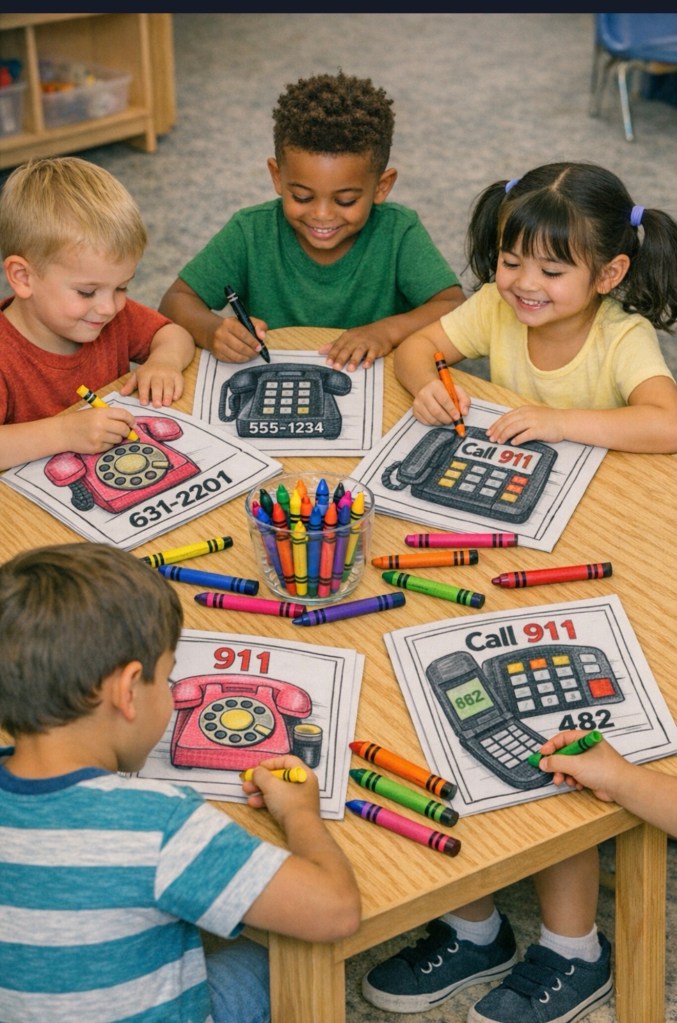
This is the core of the ABCs of Being Prepared curriculum — every letter of the alphabet, each paired with an emergency preparedness concept, a play-based teaching method, and a conversation starter for use while coloring the page together.
Work through these at whatever pace fits your family. One per week is sustainable and produces a fully covered curriculum in six months. Two per week works well for families with higher engagement or specific urgency. There is no benefit to rushing — depth beats speed at this developmental stage.
Each letter entry includes four elements: the concept your child learns at ages 3 to 5, a specific play-based method for introducing it, what to say while coloring the page together, and a conversation starter that can be revisited days or weeks after the initial lesson.
Print this post. Mark each letter as you complete it. Return to completed letters periodically and use the conversation starters as maintenance checks. The curriculum is not a one-time event — it is a living practice.
Before You Begin: Complete the six core activities from Post 4 before starting the full A-to-Z curriculum. The activities build the foundational skills (flashlight location, go-bag, meeting spot, calm listening, water awareness, breath regulation) that the A-to-Z curriculum reinforces and extends. Starting with the activities first makes every letter lesson more effective.
Alert
A specific sound means act right now. We learn what our home’s alarms sound like and what each one means.
Play the alarm sound on your phone. Practice the response together as a game — freeze, identify, respond. Make it calm, not frightening.
“When the smoke alarm beeps, what do we do first?”
Bucket
One container can hold everything a family needs to be safe. Our bucket has a home and we always know where it is.
Let your child peek inside the bucket. Take each item out and name it. Let them help put it back. Make the bucket feel like treasure.
“What lives in our emergency bucket?”
Candle
Light can come from many places. Some need grown-up hands. Some children can use. We know which is which.
Demonstrate a battery lantern, a glow stick, and (safely, with supervision) a candle. Let them operate the ones they safely can.
“Which light can you use by yourself?”
Documents
Some papers prove who we are and where we belong. Our family keeps them safe in one special place.
Show the waterproof document folder. Tell them it has the papers that explain who your family is. Make it feel important and cared-for.
“Where do our important family papers live?”
Emergency Plan
Our family has a plan. Everyone in our family knows their job when something happens.
Draw the plan as a picture together. Who goes where? Who does what? Post it somewhere visible. Point to it daily.
“What is your job in our family plan?”
Flashlight
We always know where our flashlight is and how to use it. It gives us light when the power goes out.
The flashlight find game — introduced in Post 4. Practice until it is automatic.
“Where is our flashlight right now?”
Go-Bag
A special backpack ready to grab if we have to leave quickly. It already has what we need inside.
Let them pack their own go-bag as detailed in Post 4. Visit and check it monthly together.
“What is in your go-bag?”
Help
We know who to ask for help: someone we trust, someone whose job is to help, someone whose name we know.
Name three specific helpers. Walk to them, point them out, introduce your child. Make trusted helpers real people, not categories.
“Who are three people you can ask for help?”
Ice Pack
When someone gets hurt, a cold pack helps the swelling. We have one in our kit and we know how to use it gently.
Practice on a stuffed animal: apply the ice pack gently to the stuffed animal’s ‘boo-boo.’ Talk about when cold helps.
“Where is our ice pack and what does it do?”
Jacket
A warm layer goes in our kit because even warm weather emergencies can make us cold when the power goes out.
Help them fold and place a jacket in the go-bag. Talk about what it would feel like to be cold without one.
“Why do we pack a jacket even in summer?”
Kit
Our emergency kit has everything: water, food, light, first aid, warmth, and a radio. Together it keeps us safe.
Do a full kit inventory together — take everything out, name each item, put it back. Make it feel like discovering treasure.
“Can you name five things in our kit?”
Light
We have more than one kind of light. Each works differently. We know them all.
Set up three light sources and let them try each one. Which needs batteries? Which needs cranking? Which do they like best?
“What are three ways we can make light when the power goes out?”
Map
A paper map shows us where things are. It works without a phone or a battery. Our route is on the map.
Print a simple neighborhood map. Circle your house, the meeting spot, and the nearest fire station. Post it with the plan.
“Can you show me our house on the map?”
Neighbor
We look out for the people who live near us. During emergencies, neighbors help neighbors.
Walk the block. Point to two or three neighbors by name. Talk about what checking on someone means and looks like.
“Who are two neighbors we know by name?”
Outage
Sometimes the power goes out. The lights stop. We know what to do and we have what we need.
Practice a gentle power outage drill: turn off the lights, find flashlights, meet at the meeting spot. Keep it calm and fun.
“What do we do first when the power goes out?”
Plan
Our family has a plan that everyone knows. Meeting point, contact, each person’s job.
Practice saying the plan out loud together. Call and response: you say ‘meeting spot?’ they say the location. Repeat until automatic.
“Where is our family meeting spot?”
Quiet
Sometimes the most important thing we can do is be still and listen for instructions.
The Quiet and Listen game — introduced in Post 4. Practice regularly until the skill is automatic.
“Why is being quiet and listening important in an emergency?”
Radio
A hand-crank radio tells us news when the power is out. Someone has to know how to crank it.
Let them operate the crank. Let them hear the sound. Let them feel the weight of it. Make it familiar before you need it.
“How does our radio work without batteries?”
Shelter
Different emergencies need different shelter. Inside for storms. High ground for floods. Outside for fires.
Walk through each room and identify the safest spot for a storm. Make it physical — sit there together, feel the walls.
“Where is the safest spot in our house during a storm?”
Tools
Grown-ups use special tools in emergencies. A wrench, a pry bar, work gloves. We know what they are for.
Show the tools in the kit at a safe distance. Name each one and its single, simple purpose. ‘This is a helper for the gas.’
“What does the wrench in our kit do?”
Unite
When something happens, our family comes together. We find each other. We stay together.
Practice family reunification: everyone disperses to different rooms, then comes to the meeting spot on a signal. Celebrate together.
“What do we do first when everyone is safe and together?”
Vitamins
Our medicines are important. They live in our kit. We never touch them without a grown-up.
Show the medication pouch. Explain that their vitamins or medicines need to travel with the family in an emergency.
“Where do our medicines live in the kit?”
Water
We store water for times when the tap might not work. We always have enough for our whole family.
Count the water jugs as in Post 4. Make it math and caring: how many people, how many days, how many jugs?
“How many days of water does our family have?”
eXit
Every room has a way out. We know how to get out of every room, even in the dark.
Walk every room together and find both exits. Practice opening the window. Make it a discovery: ‘Two ways out of everywhere.’
“How many ways out of your bedroom can you find?”
You
You are an important part of our plan. You have a job. You matter to your family’s safety.
Give them their one real job. Practice it until it is automatic. Tell them clearly: your job matters to all of us.
“What is YOUR job in our family emergency plan?”
Zero Panic
When we are prepared, we know what to do. We breathe slowly and we act. We don’t have to panic.
Three Slow Breaths — introduced in Post 4. Practice it anywhere, anytime. Make it a family habit that belongs to all of you.
“What do we do when we feel scared in an emergency?”
Work through the table one letter at a time, at your family’s pace. Return to any letter as often as you like. Use the conversation starters in the car, at dinner, before bed — anywhere your child is relaxed and receptive. The curriculum works best when it is woven into ordinary life, not set apart as a special occasion.
When you have completed all 26 letters for the first time, go back to the beginning. Your child’s understanding will have deepened significantly in the interval, and the second pass will feel like a richer, more resonant experience for both of you.
Tags: ABC emergency preparedness curriculum, all 26 letters preparedness, preschool emergency education, complete preparedness curriculum ages 3-5, alphabet emergency readiness, lesson plans young children preparedness
Series: Little Learners, Big Preparedness • Post 5 of 7: The Full A-to-Z Curriculum
Post 5 of 7 • Approx. 3,000 words including table • Audience: Parents and caregivers of children ages 3–5

