POST 6: THE HARD CONVERSATIONS

Return HOME

When Your Preschooler Asks the Questions You Weren’t Ready For

Little Learners, Big Preparedness Series

Approx. 15-minute read  •  Specific language for every difficult question
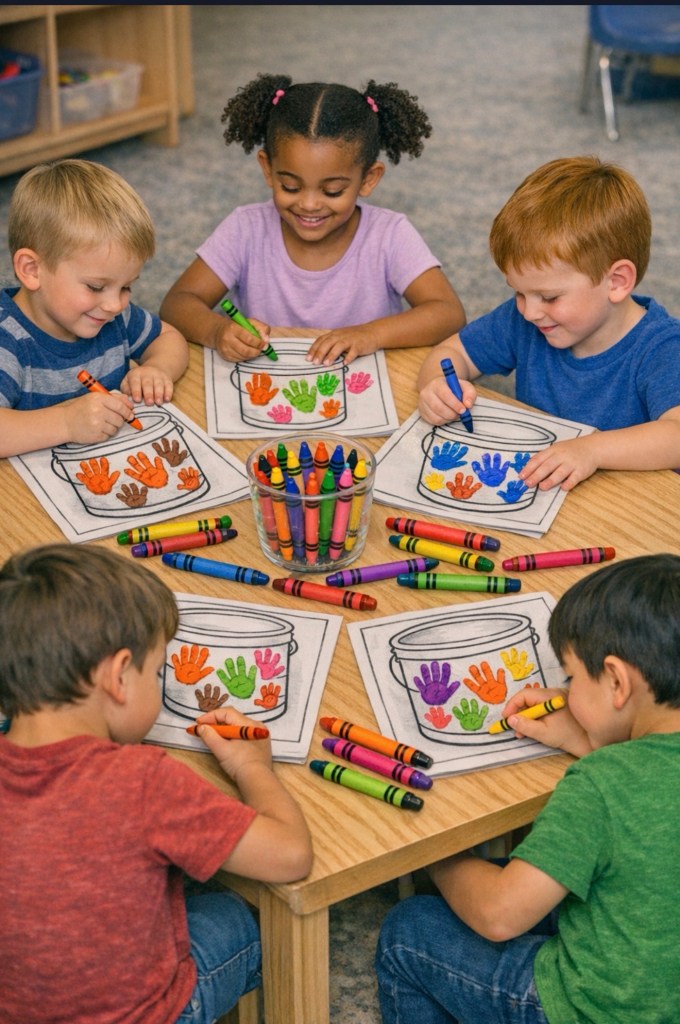

You are sitting at the kitchen table coloring the tornado page together, and everything is going well. Your child is engaged, coloring carefully, asking good questions. And then, without warning, they look up from the page and ask one of the questions you weren’t quite ready for.

‘Could a tornado actually come to our house?’ Or: ‘What if I can’t find you?’ Or the hardest one of all: ‘Are you going to die?’

These moments are healthy. They mean your child is engaged, thinking, and trusting you enough to bring their deepest fears into the open. They deserve honest, age-appropriate responses — not reassurances that sidestep reality, and not adult-level detail that overwhelms.

This post gives you specific language for every difficult question a preschooler is likely to ask about emergencies. It also covers what not to say, how to recognize when a child needs more support than preparedness education can provide, and how to navigate the specific challenges of teaching emergency readiness to children who have experienced previous trauma or loss.


A child who asks a hard question is not in crisis. They are doing something courageous: bringing their private fear into the light, in a relationship they trust. Honor that courage with honesty.


Before the Questions Come: Setting the Stage

The best preparation for hard questions is a general conversational culture in which your child knows that no question is too big, too scary, or too embarrassing to ask. This culture does not emerge from a single conversation — it is built over hundreds of small moments in which a parent receives a difficult question without flinching, without deflecting, and without either minimizing or catastrophizing.

When you sit down to color a preparedness page with your child, you can signal this culture explicitly: ‘If anything I say makes you wonder something or feel a little worried, tell me. There are no wrong questions. We can talk about anything.’

That simple invitation changes the dynamic of the entire session. The child who has been given explicit permission to ask is far more likely to surface a fear while it is manageable than to carry it privately until it becomes a source of ongoing anxiety.


The Questions — With Full Suggested Responses

‘Could that actually happen to us?’

What not to say: ‘Don’t worry, that won’t happen here.’ This is a false reassurance that the child will eventually discover is untrue, and that erodes trust in ways that outlast any individual conversation.

What to say: ‘Some of these things are possible — storms happen, power goes out sometimes, things can be hard. That’s exactly why we have a plan. Want to tell me what our plan is?’ Pivot immediately from possibility to preparedness. The child who finishes this conversation knowing that their family has a plan for the thing they just learned is possible is less anxious than when the conversation started, not more.

Age adjustment: For a three-year-old, keep it simpler: ‘Yes, sometimes things like this happen. And do you know what? We have a plan. Want to tell me what it is?’ For a five-year-old, you can add slightly more nuance: ‘Some emergencies are more likely where we live than others. Where we live, we’re more likely to have storms and power outages than some other things. And we’re ready for those.’

‘Will we be okay?’

What not to say: ‘Of course! Everything will always be fine.’ Young children can sense when adults are being dishonest, and empty reassurances teach them that hard questions get dishonest answers — which makes them less likely to ask in the future.

What to say: ‘We are going to do everything we can to make sure we are, and we have a really good plan. We have our kit, we have our meeting spot, and we know what to do. And do you know what the most important part of our plan is? You. Because you know what to do, too.’

The pivot to the child’s own action is essential. This answer does not promise an outcome that cannot be guaranteed. It promises effort, preparation, and the child’s own meaningful role in the family’s safety. That is both honest and empowering.

‘What if I can’t find you?’

This question cuts to the heart of a child’s deepest fear: separation. It deserves the most honest, specific, practical answer you can give.

What to say: ‘If we ever get separated, here is exactly what you do. First, you go to our meeting spot and wait for me. If I’m not there, you find a trusted adult — a police officer, a teacher, someone in a store who works there — and you say your name, your address, and my phone number. Can we practice that right now?’

Then practice it. Out loud, right then, in the calm of the kitchen with the coloring page on the table. Name. Address. Phone number. Practice it until it comes automatically. The child who has rehearsed this script in a calm context can produce it in a stressful one.

What not to say: ‘Don’t worry, that won’t happen.’ It might. Your child knows it might. What they need is not denial — they need a plan.

‘Are you going to die?’

This is the question most parents feel least prepared for, and it comes up more often than most expect — especially around fire, flood, or storm pages.

What to say: ‘I am doing everything I can to stay safe and to keep our family safe. That’s what our plan is for. I love you very much, and keeping us all safe is the most important thing to me.’

Do not say: ‘No, of course not’ or ‘That’s not going to happen.’ These feel reassuring in the moment but are promises no parent can keep, and a child who is already aware enough to ask the question will sense the evasion.

Age consideration: A child old enough to ask this question in the context of an emergency preparedness conversation is old enough for a real, warm, loving, honest answer. The answer above gives them what they need: a parent who is actively working to protect them, who loves them, and who has a plan.

‘Why are you teaching me this? Is something going to happen?’

This question often comes from children who are more perceptive than average or who have encountered adults using preparedness as a vehicle for anxiety. It is a healthy, direct question and deserves a direct answer.

What to say: ‘No, I’m not expecting anything specific to happen. I teach you this for the same reason I teach you to look both ways before crossing the street — because smart, caring families think ahead. Most days, you’ll never need this. But on the day you do, you’ll have it. And that makes me feel really good as your parent.’

This answer reframes preparedness from reactive fear to proactive love. It puts this curriculum in the same category as car seats and bike helmets and hand-washing — not because disasters are imminent, but because thoughtful care looks ahead.

‘I don’t want to talk about this.’

This is not a question — it is a signal, and it deserves as much respect as any question on this list.

What to do: Stop. Immediately and without argument. Say: ‘Okay. We don’t have to talk about it today. Shall we color something else?’ Then come back to the topic another day, in a different way, perhaps with a different entry point — maybe the flashlight game instead of the coloring page, or a story instead of a direct conversation.

Some children need more time to build the emotional tolerance for these topics. That is not a problem — it is developmental information. Pushing through resistance produces anxious avoidance, not learning. Patient, repeated, low-pressure access to the material produces gradual, lasting engagement.

What Not to Say — A Short List

Certain responses, however well-intentioned, tend to either close down the conversation or increase a child’s anxiety. Avoid these:

  • ‘Don’t worry about that.’ — Dismisses the child’s concern without addressing it.
  • ‘That’s not going to happen.’ — A promise you cannot keep, which erodes trust when reality eventually contradicts it.
  • ‘You’re too young to think about that.’ — Closes a healthy, open channel of communication.
  • ‘I don’t know’ with no follow-up. — Honest but incomplete. Follow ‘I don’t know’ with ‘but here is what I do know’ or ‘let’s find out together.’
  • Detailed adult-level information about death tolls, disaster statistics, or graphic scenarios. — This information is not appropriate for this age group and produces fear without any of the compensating framework that makes fear manageable.
  • Visible anxiety while answering. — Your emotional tone is absorbed before your words. If a question catches you off guard, it is completely appropriate to say: ‘That’s a really important question. Let me take a breath and think about it.’ Then model Three Slow Breaths. You are teaching calm — be calm.

When a Child Needs More Than Preparedness Education

For most children, well-delivered preparedness education reduces anxiety rather than increasing it. But some children — particularly those who have experienced previous trauma, loss, or significant stress — may show signs that the topic requires more support than this curriculum can provide.

Watch for the following:

  • Persistent nightmares or sleep disruption that begins during or after preparedness discussions
  • Repeated, escalating worried questions that do not settle with reassurance and practical answers
  • Clinginess or separation anxiety that increases significantly during preparedness activities
  • Somatic complaints (stomachaches, headaches) associated with preparedness discussions
  • Regression in developmental skills (bedwetting, baby talk, thumb-sucking) that begins during this period

If you observe any of these, slow down or pause the preparedness curriculum entirely. Consult your child’s pediatrician or a child therapist. This is not a failure of the curriculum — it is appropriate responsiveness to your child’s individual needs. Preparedness education should always be calibrated to the individual child, not delivered on a fixed schedule regardless of response.

Children who have experienced natural disasters, house fires, or significant losses require particular care. For these children, the goal of preparedness education shifts from introducing new concepts to building a sense of control and agency around existing memories. A trauma-informed therapist can help you navigate this work in a way that is genuinely supportive rather than retraumatizing.

Remember:  The hard questions are not problems to be solved or deflected. They are opportunities — invitations from a trusting child to help them make sense of a world that is genuinely complex. Each honest, warm, age-appropriate answer you give is a thread in the fabric of security your child carries with them. Take the questions seriously. Take your time. You are doing something important.

 NEXT: THE POST 7:

YEAR-LONG PLAN

Return HOME


Tags: hard questions preschoolers emergency preparedness, what to say about death to child, tornado questions children, will we be okay child, separation anxiety preparedness, trauma and preparedness education, child anxiety about emergencies

Series: Little Learners, Big Preparedness • Post 6 of 7: The Hard Conversations

Post 6 of 7  •  Approx. 2,500 words  •  Audience: Parents and caregivers of children ages 3–5